

It had been the slowest school day ever. I had spent all morning squirming in the hard wooden seat facing the blackboard. My feet danced restively on either side of the black metal support that connected the swivel seat to the metal desk. I kept lifting the hinged wood desktop, scarred with the scratched initials of countless prior kindergartners, and pulling out another pencil or crayon to try to fit into the hole in the wood that once held an inkwell. All the while, my eyes followed the glacial sweep of the second hand on the big black and white clock on the front wall.
Finally, the classroom door opened and my mother walked in, hair and wool overcoat speckled white with fresh snow. I jumped out of my seat and ran past other desks to the back of the class and into the cloakroom. I plopped onto the low bench and pulled my bulky rubber galoshes from the boot tray underneath. My shoed feet slipped easily into them as they were sized to last two seasons, but my trembling fingers had trouble hooking and closing the three metal buckles on each boot.
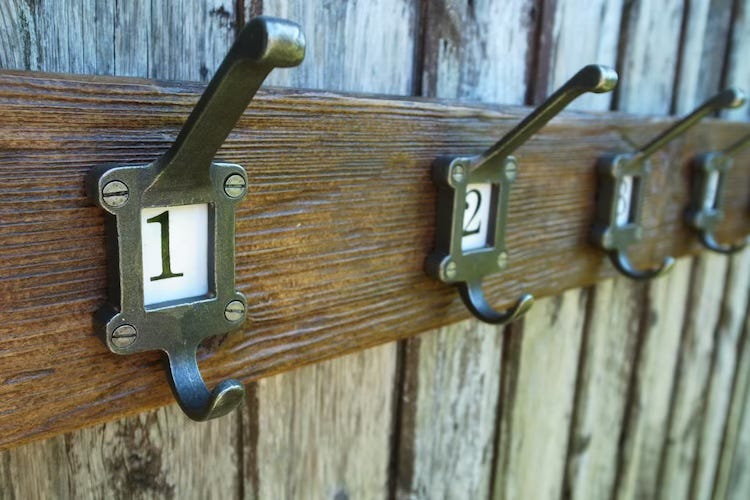
My winter coat, snow pants, and a small duffel bag hung on a double hook with my name taped above. As I put on the coat I looked from my feet to the winter pants and shrugged. There would be no playing in the snow today, so I reached for the duffel and stuffed them in. My wool hat wasn’t hanging there. It was once again bunched in a coat pocket, wet and smelly. Before leaving, I turned and looked around the cloakroom, my wool mittens flopping against my hands, the connecting string running the length of each sleeve and across my back.
To this day, I remember the cloakroom far better than the classroom. It was—it seemed— at least half as big as the classroom itself. I’d swear we spent more time in it, too. Unbundling in the morning, bundling for recess, unbundling after recess, and bundling to go home. Twenty-some bodies at once. Times 4. The nearly overpowering smell of wet wool, rubber, chalk dust, lacquered oak, and sweaty kids. It was where we would go at snack time to collect our small bottle of milk, straw to punch through the paper seal, and graham cracker to take back to our desks. Cookie if we were lucky. It was also where we were sentenced to a time out as the need arose. I would never see a room like this again.
I joined my mom in saying good-bye to my teacher, who prompted the class to wave good-bye to me. We walked through the drafty hallway and out the front door. The snow had stopped and the streets were quiet in Monroe, Michigan on a weekday morning, and the crunch of our feet on the unshoveled sidewalks seemed loud. We passed the yard where just a few weeks ago we had played in a huge pile of red and yellow leaves.
I took it all in. We were leaving. We were moving to Southern California.
Read the AI Field Note for this vignette
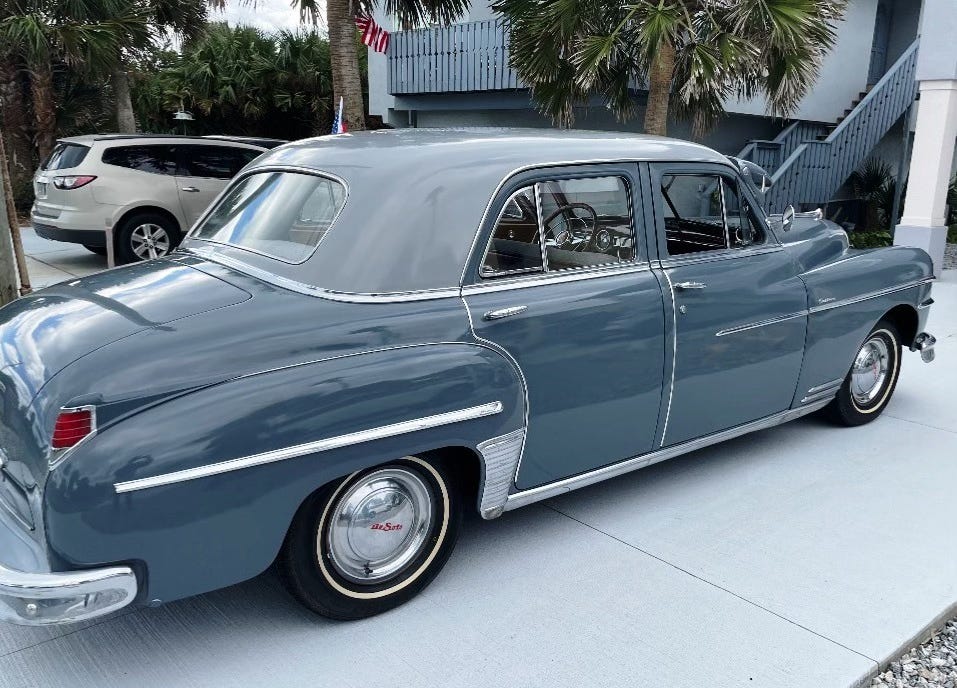
When we turned into our street, I could see my father at the back of our car—a 1949 DeSoto— the trunk lid up, shifting things around inside. Patty, my 2 1/2 year old sister, appeared in the side window, then disappeared. My mother went straight to my father. How much more did he have? He gestured at the few things still on the driveway. She nodded and went inside.
I went in too, to collect my things. My cardboard box would be full — DC comics (Batman, Wonder Woman, the Flash, and my favorite, Superman), various Disney comics, and some picture books I could read to Patty during the long miles ahead. The box was made particularly heavy by the World Book A volume. There was a clipboard and a pad of paper, pencils, and crayons. And my piggy bank, the kind with a cork in the bottom, at least half full of coins I’d been dropping in for months. The plan was for this to be my spending money. My job was to count it and decide how to budget for souvenirs along the way, leaving enough for our final stop: Palm Springs, where my grandparents lived now.
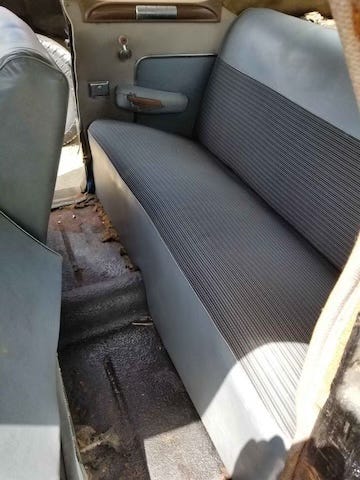
I carried everything out and got settled in the back seat, putting my box next to Patty’s. She had filled hers, with a little help from Mom, with a doll, stuffed animals, a few toys, and her own clipboard, pad of paper, and crayons. She would be behind Mom and I behind Dad. He had laid out two sleeping bags, one on top of the other with a small hump in the middle, to be a second space for each of us on the long drive. They were wool-lined canvas, the kind his Scout troop used. They smelled like campfire and damp and something indefinably his.
My mother came out with the food — sandwiches that wouldn’t need refrigeration, wrapped and packed for the road, along with a couple of bags of snacks, napkins, cups, plates, and utensils. She and my father worked the trunk together, fitting in the last odds and ends. Additional clothes for the days on the road. Jackets for rest stops. The small things that she wished she’d brought along last year when we made our first drive to California to visit his family who had recently moved to Southern California.
At some point before my parents locked the door and got in the car, a couple of the neighbor women appeared on the sidewalk in their wool coats to say goodbye. Most farewells had taken place over the previous couple weeks—it was remarkable how many connections had been made in just over four years of living in Monroe. They chatted briefly and hugged each other. These were neighbors who knew and cared about each other.
The coffee thermos was already on the front seat, freshly refilled by my mother. My father had emptied it once already while getting the car packed.
When everything was in, he closed the trunk with both hands and we got underway. My mother settled in front with Patty. I knelt on the back seat as we backed out of the driveway, watching the house recede as we pulled away — the front door, the porch, the yard. We drove past my school on the way out of town. The playground was full of bundled-up kids throwing snowballs, oblivious to the DeSoto rolling past. I watched them through the window until the school was gone.
Then there was just the road.
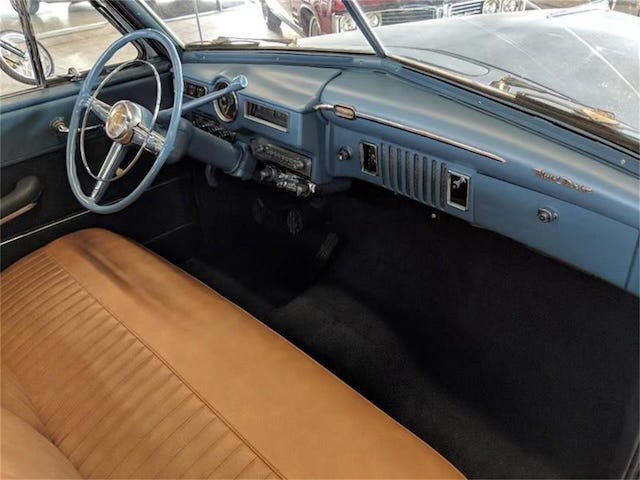
US 24 south out of Monroe was a familiar route — we’d often taken the 30-40 minute drive to Toledo, Ohio, to visit Aunt Willene and Uncle Jim before they moved west. But today we weren’t stopping. Today we turned west at Toledo and kept going on US 20 — a 2-lane strip of asphalt that did its best to pass through a couple dozen small towns along the agricultural northern edges of Ohio and Indiana. There wouldn’t have been a lot of traffic, but it was mid-December and it could be icy.
My mother passed back half-sandwiches not long after we left, no stopping required. Patty ate hers in small bites, dropping pieces, and was asleep before we reached the Ohio line, her stuffed animal tucked under one arm, a blanket half under her and half over, her small body curved against the seat. The car got quieter.
I read comics for a while — Superman, Donald Duck, working through the stack slowly because I knew they had to last. When I tired of those I pulled out the World Book A volume, thick and familiar. My father had carried it in his sales kit, but he often pulled it out for us to use together. From the front seat he’d call back a topic — “Airplane” — and I’d have to find it, work through the guide words at the top of each page until the pictures appeared. Color photographs of propellers and cockpits and wing configurations. I’d study them, read the captions, and report back. Then he’d give me another.
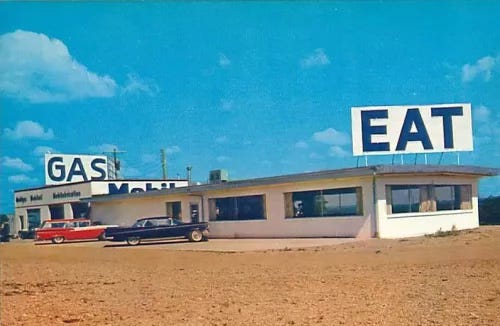
We stopped once later in the afternoon, somewhere in Indiana — a gas station with a lunch counter inside, warm and smelling of coffee and griddle grease. We ate quickly, used the restrooms, got back in the car. The December sky had gone flat and gray. My father checked the road ahead and said something to my mother I didn’t catch.
When Patty woke we played 20 questions. She sat on my mother’s lap and Mom would whisper suggestions in her ear while I guessed. She didn’t entirely grasp the rules, but she understood that we were playing something, and that was enough. She got better as the miles went on. By the time we crossed into Illinois the light was nearly gone and she was dozing again.
The road got busier as we came up on Chicago — more trucks, more lights, the smell of something industrial in the cold air. Gary, Indiana, my father said. We were close.
He found a motor court set back from the road, a single story of identical doors arranged in an L around a gravel lot, a neon sign throwing red light across the DeSoto’s hood. VACANCY. He went in to get the key while we waited in the car, the engine ticking as it cooled.
The room smelled of cigarette smoke and cleaning fluid and the faint ghost of a hundred previous travelers. Two double beds with chenille spreads, a nightstand between them, a radio, an ashtray with the motel’s name on it. A small tiled bathroom. My mother got Patty settled, then pulled out the remaining sandwiches and apple slices while my father brought in what we needed for the night — not everything, just enough. He made two trips and locked the car.

Mom had spread towels on top of one of the beds and laid out the sandwiches in their waxed paper packets and some apple slices — a picnic of sorts.
After we ate, Dad said he had a treat for us before bedtime. He hoisted a giggling Patty over his head and onto his shoulders and we walked next door to the diner. The motel manager had told him it had the best pie in the state.
Two pieces of berry pie for four to share, small cartons of milk for the kids, and steaming cups of coffee for the adults. I knew last year’s trip had been long, but I still had to ask, “How much farther until we get there?”
My dad almost choked on his coffee and my mom laughed.
He set the cup down and asked, “Do you know what highway we’re getting on tomorrow?”
He waited but I didn’t answer. Finally, I shrugged and shook my head.
“It’s Route 66. And here’s the thing — it starts right here. Well, not this diner. But Chicago. Tomorrow morning we drive into Chicago and we find the starting line. Like a race.”
He smoothed out a clean paper napkin and drew a short line between two dots.
“See this? This is how far we drove today, from Monroe to the motel.”
He made a bigger dot right next to the little one.
“This is Chicago. And…”
He drew a long squiggly line diagonally to the lower left corner of the napkin, where he made another big dot.
“And way over here? That’s Palm Springs, where Grandma and Grandpa live now. And this road right here in the middle — that’s Route 66. Two thousand, three hundred miles.”
“You mean we’re going to be on one road the whole trip?” It seemed impossible. I looked at my mother for confirmation.
“And we drove the whole way on it last year, too?” Mom smiled and nodded. “Why didn’t you tell me?!”
Dad started to say something, but she put her hand on his and said, “I don’t know. Maybe we were saving it for this year. You can help us read city names on the highway signs and we can keep track of how far along we are by the cities we check off when we go through them.”
Dad nodded. “Actually, we’ll take another road at the very end to get to Palm Springs. Otherwise, yeah, the whole way. You know, Route 66 is pretty famous already. There’s even a song about it. We’ll learn a lot about the road, and cities and states, and you can tell your children about it someday — that you actually drove the famous Route 66 when you were just five years old.”
None of us at the table that night could appreciate the irony in my father’s words. We couldn’t know that for at least the next sixteen years none of us would live more than a stone’s throw from the Mother Road.
What a vivid memory. The sensory details make me feel like I'm there. Nice writing.
Your details about the cloakroom were so familiar to those in my elementary school in Northern California. 1950's