

Anyone focusing on the past few weeks in the Middle East will—like me—have a head full of dark thoughts. Then, while trying to transpose thoughts to paper the past few days, a slim ray of sunshine peeked through the clouds. The newsfeed I was reading had several article links along the left side—each about a different current judicial defeat suffered by Trump & Company. And, in bold type above them, was the report of the Supreme Court’s dubious reception and likely rejection of the arguments by Trump’s Solicitor General to end birthright citizenship.
True, in the time it takes one unconstitutional policy or action to be rejected by the courts, many additional assaults on our democracy occur. But at least we have one branch of government standing up to Trump some of the time.
Not so on the international stage, where the office of the President is granted great latitude and discretion, and the courts have no say. Such unfettered prerogative residing in one individual has always been accompanied by the assumption that the electoral process would reveal and reward some combination of desirable qualities and character in the individual. Furthermore, once elected, the president would be bolstered by a small army of advisers and Cabinet officers, selected for their experience and expertise. They would be leading a vast organization, rich with institutional knowledge and inexhaustible resources.
So much for assumptions.
Last Wednesday’s Iran speech by the president achieved nothing — other than announcing the abdication of U.S. leadership and dissolution of the Rules-Based International Order we championed for nearly seven decades. We find ourselves now living in a different world where assumptions are obsolete and dangerous. How did we get here and what comes next?
It took just one year for the president’s hostile words and actions toward the international community to cascade from incident to incident, and culminate in the reckless decision to start a war with Iran:
· January 2025-January 2026 — On day one of his second term, Trump signed executive orders withdrawing again from the World Health Organization and the Paris Climate Agreement. By January 2026, he had announced withdrawal from 66 international organizations.
· January-February 2025 — The dismantling of USAID. Agency creation and elimination requires congressional approval; nothing was ever brought to the legislative branch requesting USAID’s dissolution. Trump dismantled it anyway. The needless death and suffering already, and the projected 14 million deaths by 2030 are compounded by the loss of dozens of humanitarian programs and thousands of career specialists working here and abroad who were, along with their experience and expertise, simply discarded.
· March 2025 to the present — Trump signed an executive order to shutter the Voice of America and related outlets overseen by the U.S. Agency for Global Media. He appointed Kari Lake to run — make that ruin — the agency and about 1300 agency employees were put on administrative leave while Lake and the government continue to appeal multiple court orders to restore them. The agency that once reached 360 million people weekly in 49 languages remains dark after more than a year.
o The combined effect of the closures of USAID and Global Media has also undermined American influence around the world. Friends of Europe, a prominent Brussels-based foreign policy organization, has called it “soft power suicide” — the voluntarily relinquishing of what was built up over 70 years leading the free world: “the special US capacity to achieve its foreign policy objectives not by military force or economic coercion, but by attracting others to voluntarily side with it and seek to intensify interaction with it.”
· January 2025-January 2026 — The recurring threat to conquer and annex Greenland began in the weeks even before the inauguration and continued into 2026, when Trump made the astonishing admission that “I don’t need international law.” He could only be constrained by “My own morality. My own mind. It’s the only thing that can stop me.”
· February 2025 — The Oval Office ambush of Zelensky, where the Ukrainian president was berated as “ungrateful” and called a “dictator.” In the following days, Trump echoed Putin’s talking points and claimed that Ukraine had started the war.
· June 2025 — Strikes on Iran’s nuclear facilities without congressional approval. This followed a March 2025 U.S. intelligence assessment that Iran “is not building a nuclear weapon” and that Khamenei “has not reauthorized the nuclear weapons program he suspended in 2003.”
· September-December 2025 — U.S. military began striking vessels in the Caribbean it alleged were carrying drugs. There were 35 known strikes, killing at least 115 people, including one in which two people were killed by a second strike after the boat was hit and capsized. Experts, human rights groups, and several international bodies said the killings were illegal under U.S. and international law.
· January 2026 — Invasion of Venezuela and capture of Maduro. Congress received no prior notification of the operation. Numerous countries condemned the raid as setting a dangerous precedent for international relations. U.S. intelligence agencies disputed Trump’s claim that Maduro was working with a cartel to orchestrate drug trafficking.
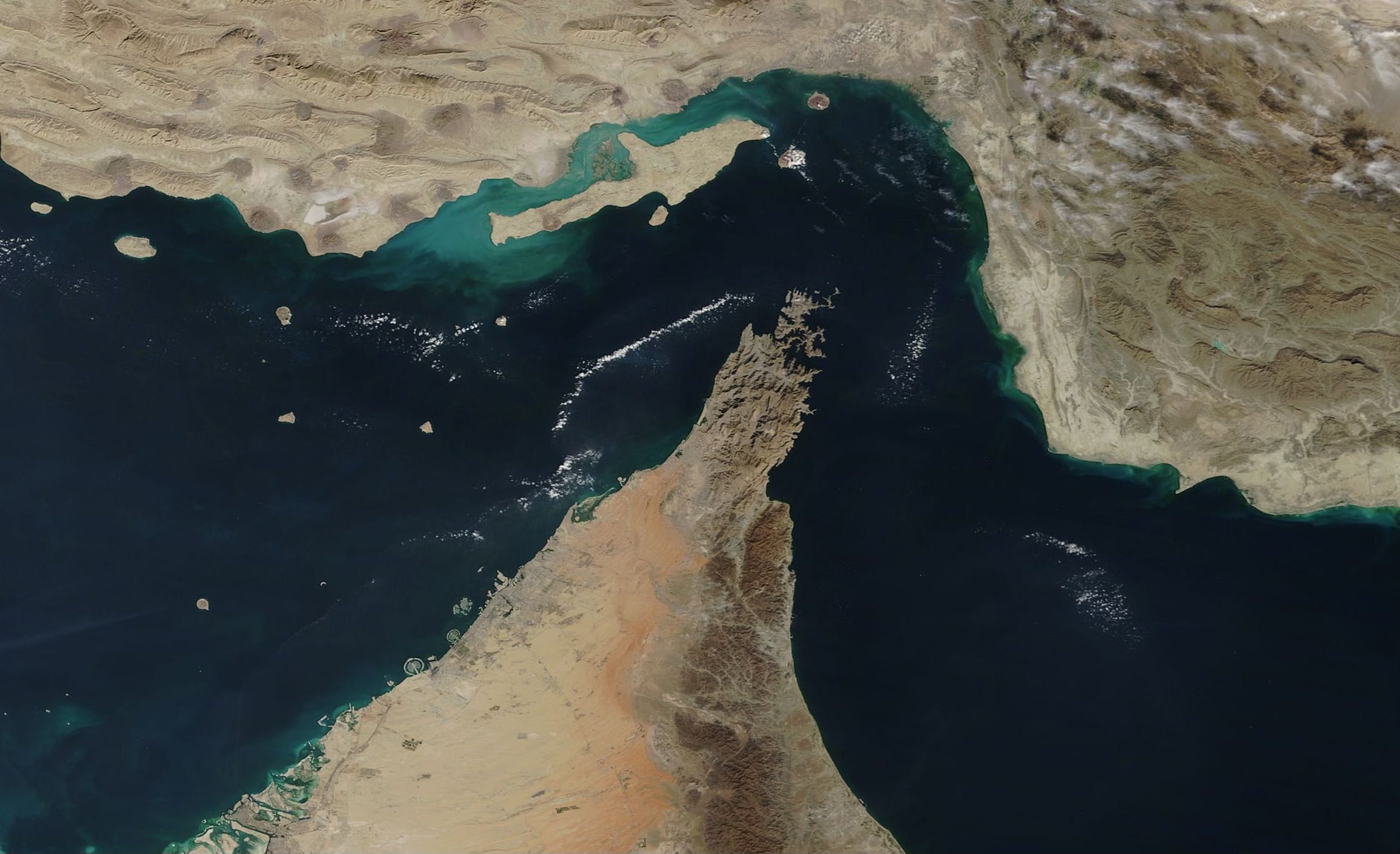
· January – March 2026 — NATO under existential strain. Trump has vowed (again) to reassess U.S. membership in NATO after the Iran war is over. He is upset by the allies’ refusal to join in, even lead, the fight to reopen the Strait of Hormuz. We should pause a moment here to reflect on a couple of ironies. Article 5 of the North Atlantic Treaty states that the signers will assist in the self-defense of one another. It does not say anything about assisting fellow treaty-signers in attacking another country. The second irony here involves the threat by the United States — the architect of the alliance — to invade and annex Greenland, the territory of fellow member state, Denmark.
The year leading up to the Iran war also saw the systematic elimination of expertise and institutional memory in favor of loyalty as the primary qualification for keeping one’s job at most Federal agencies, including the State Department, CIA, NSA, and the Department of Defense. At the Pentagon, Secretary Hegseth let 60,000 civilian employees go, but that’s only part of the story. He pledged in September to get rid of 20% of the entire military’s officer corps. He and Trump fired six of the nation’s most senior officers, with more than 200 years of combined military experience, an unprecedented shakeup of senior military leadership. Fired not for misconduct, but for insufficient loyalty. If your goal is to make important decisions without consultation, you first remove the people whose job it is to push back, ask hard questions, and give independent analysis. What’s left is a rubber-stamping echo chamber led by a Defense Secretary whose only apparent qualification for the job is his passion for blowing things up.
By February this year, then, there remained few members of the administration with the inclination or temerity to give honest, independent opinions to the president. Time.com reported just a few days ago two White House sources saying that chief of staff Susie Wiles was “concerned that aides were giving the President a rose-colored view” regarding Iran.
In addition to basking in the rosy haze of sycophancy, Trump was primed for a war on Iran by the series of cheap early military wins listed earlier. In the NY Times podcast The Opinions, in the episode “Everything After This Will Be Harder” on March 23, retired four-star general Stanley McChrystal described how Trump had been “seduced” by the relative ease of the earlier attacks on the Iranian nuclear facilities and the night-time raid and abduction of Maduro in Venezuela — and the myth of winning through dominant air power. General McChrystal compared today’s intense bombing in Iran with the “shock and awe” that opened the Iraq War, which was followed by ten years of our ground troops in a quagmire.
On February 23, according to Axios, Netanyahu called Trump to inform him of a confirmed date and location when the Ayatollah Khamenei and top advisors would be together. That was the first of several calls from both the Israeli prime minister and Crown Prince Mohammed bin Salman, lobbying Trump to join Israel in an attack. According to the Wall Street Journal, Senator Lindsey Graham was also urging the president to attack Iran in multiple conversations. Besides them, the only people we know of whom Trump was consulting was a small group of advisers at Mar-a-Lago that included Hegseth and Joint Chiefs Chairman General Dan Caine. The General, the only military adviser, was alone in raising cautions.
The people who were notified — Congress, NATO, the public — were told either minutes before or after the fact, via social media. The institutional architecture that exists to deliberate before going to war — the intelligence community, the cabinet, Congress, the alliance — was bypassed.
Consequently, we are in a war conceived by the secret machinations of a president consulting with foreign leaders and a former television personality but not his intelligence community. Secure in the tactical superiority of the U.S. military, but eschewing any strategic planning, the administration has responded to questions about why we went to war by playing a mystifying game of Whack-a-Goal.
As of April 7, most of the world is holding its breath to learn if Trump’s ultimatum (for now) is going to end in another TACO moment (Trump Always Chickens Out) or any of dozens of other unpredictable outcomes — up to and including the unthinkable but whispered possibility of a tactical nuclear strike.
It has begun to look like Trump’s idea of America First is actually “I’m going to impose my will on America first. Then I’m going to impose it on the rest of the world.” For an autocrat who is a morally bankrupt narcissist, that is probably the truest answer to “Why did we go to war?”
Foreign policy analysts and international relations specialists have begun to speak of the United States as a rogue nation. That was a tough sentence to write. But consider the resonance of merely the title and subtitle of a March 30 article in The Atlantic, by lifelong conservative hawk and senior fellow at the Brookings Institution, Robert Kagan:
AMERICA IS NOW A ROGUE SUPERPOWER
Washington’s conduct in the Iran war is accelerating global chaos and deepening America’s dangerous isolation.
And, in the March 26 Foreign Policy Magazine, Belfer professor of international relations at Harvard University, Stephen M. Walt wrote an article titled, “The United States Has Become a Rogue State.” He states:
Every country in the world is having to figure out how to deal with an increasingly rogue United States. Here’s why this is a hard problem. The United States is still very powerful, even if it is now pursuing policies that will weaken it over time. For the moment, however, other states still have to worry that U.S. power could be used to harm them either intentionally or inadvertently.
Kagan explains that the post-World War II world thrived under U.S. dominance because, rather than regarding global superpower America as a danger to be contained, other nations mostly saw it as a partner to be enlisted. However:
Those days are now over and will not soon return. Nations that once allied with the United States will now remain aloof or align against it—not because they want to, but because the United States leaves them no choice, because it will neither protect them nor refrain from exploiting them. Welcome to the era of the rogue American superpower. It will be lonely and dangerous.
With Claude AI’s research assistance, I surveyed the international relations literature on rogue states and found some of it to be unnervingly relevant. I felt these were the most relevant:
— Rogue states reject international norms and destabilize treaties and other collective efforts.
— When a dominant state stops being an enforcer of international rules, itself becoming a norm-violator, the international order is destabilized.
— This defection from norms by the dominant state can trigger a cascade of defection among other nations since norms derive much of their force from the modeling of the dominant one(s).
— When a democratic state backslides from democratic norms domestically, their foreign behavior tends to become more erratic and norm-defying.
If you are still reading, thanks for hanging in there. I’m sure this wasn’t any easier for you to read than for me to write, though I certainly hope it took you much less time. This is where the concluding paragraph should go, but there’s a problem. It’s currently 3:30pm PDT on Tuesday April 7 and I’m monitoring news sites prior to the 5:00pm PDT deadline Trump gave Iran to agree to a cease fire. It is difficult to imagine there won’t be an agreement, or more likely a postponement of the deadline. But, Trump’s rhetoric in the past 72 hours has crossed a dangerous line, even for him. Consider:
Sunday April 5 (Happy Easter!) — Trump threatened to destroy Iran’s bridges and power plants by Tuesday night, demanding Tehran “Open the Fuckin’ Strait, you crazy bastards, or you’ll be living in Hell.” CNBC He also told ABC News that “we’re blowing up the entire country” ABC News if no agreement was reached.
Monday April 6 — Trump told reporters in the White House briefing room that “the entire country could be taken out in one night.” ABC News He set a specific deadline: 8 p.m. ET Tuesday — tonight — for Iran to make a deal including reopening the Strait of Hormuz, or face bombardment of critical civilian infrastructure including all bridges, power plants, and desalination facilities.
Tuesday April 7 — Trump posted on Truth Social: “A whole civilization will die tonight, never to be brought back again.” NBC News He added: “I don’t want that to happen, but it probably will.” Time He called the moment “one of the most important moments in the long and complex history of the world.”
As I was watching the news this afternoon and learning that Iran, Israel, and the U.S. had agreed to an admittedly vague 2-week cease fire, I also happened to see retired General Barry McCaffrey being interviewed. He agreed with the whispers I mentioned earlier that some form of nuclear attack on Iran was being implied when the president threatened the sudden death of a whole civilization. Even if he was bluffing, it was no less terrible.
So, is this who we are now? No, not most of us. But as far as our president is concerned, he and his party and base are comfortable with “L’Etat, c’est moi.” I am the state. And the state of our state is rogue.